mentoring4u

Autor: Koltermann

  • Critical Analysis of Higher Education Sector in Libya / Part 4

    1. Discussion and Policy Implications

    The claims by the previous regime over massive spending and investment in education may have been valid, but certainly not over the period under this study. Over the period 2002-08,  on average, between 3 and 4 percent of GDP was allocated to education. Moreover, as shown earlier, per-capita spending in this sector was by far the lowest in the overall economy. Years of under-resourcing and poor management has now left the Libyan education sector in a dire position. Coupled with corruption and injustice, the overall quality of education provision is now seriously questioned. The findings from our survey questionnaire have clearly shown that low wages and unfair promotional schemes have led to lack of incentive and severe decline in innovative teaching and research. In particular, in our sample of 200 teachers/instructors and lecturers in higher education institutions, over three-quarters stated that they had produced no new teaching material; and nor have they attempted any enhancement in their teaching delivery.

    These findings are compatible with those of Saad (2012) which reports that lack of innovative Libya was run as a closed economy for well over 40 years until November 2011. Those years of isolation led to severe decline in provision of quality in all aspects of the economy; and education was indeed of no exception. Quality education, like any other commodity, whether offered by the state or the private sector, cannot be maintained unless factors of production – here being teachers/lecturers and capital – are directly and fairly rewarded. Particularly since the early 1980s, under payment, widespread corruption, and banning of teaching of foreign languages from schools had led to serious lack of incentives, hence decline in quality of education delivery.

    Paulwip / pixelio.de
    (Die Mona Lisa, Paulwip / pixelio.de)

    As for policy implications arising from this research, two main issues are worth noting here. First, low public pay is a main source of bribery, poor service quality and corruption. Particularly, in the light of gradual rising of prices of basic commodities since the uprising of 2011, it is vitally important for the policy-makers to review and to index wages in accordance with projected inflation rates.

    Introduction of efficient and fair monetary reward system is 14  one of the fundamental bases for improved productivity and hence enhanced quality teaching. It should be borne in mind that decisions on building new schools or colleges in different corners of this massive country is justified, if and only if adequate facilities and quality human resources are made available. Second, policy-makers must make every effort in introducing an effective, transparent and workable national promotion mechanism for appreciation of quality service in teaching and research. To ensure that corruption has no place in this new system, constant supervisory quality enhancement procedures, preferably conducted by independent watch dogs supported and monitored by the end consumers, must be implemented and supported.
    Maren Beßler pixelio.de
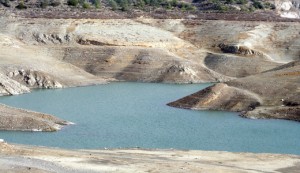
    (Stausee, Maren Beßler pixelio.de9)

    One way of achieving this objective may be found by making closer collaboration with institutions in other countries to achieve excellent quality assurance systems and accreditation of educational programmes. In short, education policy must be based on quality enhancement and regular monitoring of teachers/lecturers teaching approaches and students’ satisfaction criteria, and nothing else. This way, the existing massive gap between output and outcome in education is anticipated to be reduced in the medium term.

    Dieser Gastbeitrag ist von Dr. M. Taghavi, London (Vice-Principal, Academic & Executive Programmes, IBEC, Tripoli, Libya, www.ibec.edu.ly).

    Hier finden Sie Part 1, Part 2 und Part 3

    Die Mentoring4u Redaktion behält sich vor, Leserbriefe / E-Mails – mit vollständigem Namen, Anschrift und E-Mail-Adresse – auch gekürzt zu veröffentlichen. Gastbeiträge spiegeln nicht unbedingt die Meinung der Redaktion wieder.
  • Critical Analysis of Higher Education Sector in Libya / Part 3

    4. The Survey Data, Econometric Approach and Estimated Results

    The data used in this study are derived from a survey questionnaire, distributed among teachers/instructors and lectures in five major universities in Libya, in June 2012. By the end of September 2012, out of a total of 320 questionaires distributed, 200 were received fully completed. For the purpose of efficiency and accuracy, a large number of questionnaires were distributed and collected online through skype and email. Prior to this survey, a pilot study of 40 teaching staff of two universities (Tripoli and Gharyan) was conducted in May 2012, aiming to identify the major quality problems with the higher education institutions.

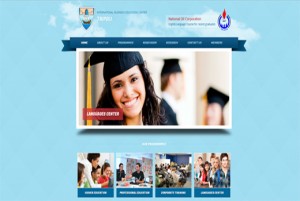
    http://www.ibec.edu.ly/
    (Tripoli, www.ibec.edu.ly)

    Following the findings from the pilot study, the final form of the questionnaire was developed. One of the main issues raised by most participants of the pilot study was that academic research appeared to be either absent or insignificant. However, a small number of staff stated that teaching (quantity and not necessarily quality) may be considered as a means of promotion and higher salary.

    Moreover, the findings from the pilot study reveals that 83% of participants regarded low wages and poor promotion scheme as the two most deterministic factors in their lack of motivation in teaching and cognitive learning development. In the final survey,  for the purpose of econometric application,  the participants were asked to answer the following question, formulating our binary dependent variable:

    Thomas Klauer / pixelio.de
    (Akazie in der Wüste, von Thomas Klauer, Pixelio)

    Have you recently considered to develop or to produce any new teaching methods or material for students?

    In the final part of the questionnaire, the participants were asked if they could rate their perceptions about low wages and poor promotion schemes, based on the Likert scale (between 1 and 5, where 1 being highly dissatisfied, and 5 being highly satisfied). These two variables are therefore considered as our independent variables, as follows:

    How satisfied are you with your current wages?

    How satisfied are you with the promotion scheme at work?

    The summa descriptive statistics relating to these three variables prersented to this table, only 22.5 % of participants stated that they had recently heired students for some form of innovative teaching. Secondly, as for the independent variables, with the means of below 2.0, participants have clearly stated their dissatisfaction with their academic system in so far as wages and promotion are concerned. These estimated means are, according to this table.

    Thus, in the light of our binary dependent variable, the appropriate estimation method is a hill-climbing logistic regression.

    Here you fill find Part 1& Part 2 .

    (Autor: Dr. M. Taghavi (Vice-Principal, Academic & Executive Programmes, IBEC, Tripoli, Libya, www.ibec.edu.ly)

  • IFA Schule@IFA: Lernparcours für Schüler und Schülerinnen ab der 7. Klasse

    Die IFA, Messe für Consumer Electronics und Home Appliances, findet vom 6. bis 11.9.2013 auf dem Berliner Messegelände (Expo Center City) statt. 4 verschiedene Lernparcours vermitteln Wissen anschaulich. Im „Young IFA-Schulworkshop wird erklärt, wie Computerspiele entstehen.

    Bereits zum fünften Mal lädt die IFA interessierte Schüler und Schülerinnen aus Berlin und Brandenburg ein, im Rahmen ihres Unterrichts die globale Leitmesse für Unterhaltungselektronik und Elektrohausgeräte zu erkunden. 2012 nahmen über 1.600 Schülerinnen und Schüler am Projekt Schule@IFA teil.
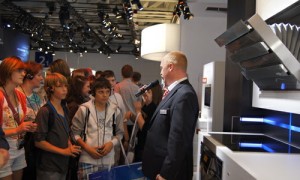
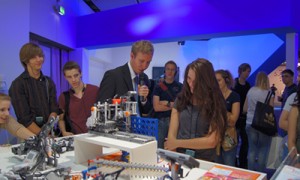
    Bei insgesamt vier verschiedenen Lernparcours vermitteln geschulte Tour-Guides den jungen Besuchern Technikwissen auf spannende und erlebbare Weise. Dieses Jahr stehen unter anderem Tablets und Touchscreens im Mittelpunkt. Apps, Smartphones, Tablet-PCs und Hybrid TV: Viele Begriffe sind bekannt. Doch was genau verbirgt sich dahinter? Wer es genau wissen will, sollte sich die geführten Touren nicht entgehen lassen.

    Teilnehmen können Schülerinnen und Schüler der Klassenstufen 7 bis 13.

    Infostand

    Folgende Lernparcours werden angeboten:

    Zukunftstechnologien
    Wieso kommuniziert die Waschmaschine mit dem Handy?“ und „Welche Technologien stecken in einem Flachbildschirm?“ Diesen und vielen anderen Fragen widmet sich der Parcours „Zukunftstechnologien“. Hier stehen vor allem innovative Technologien, die unsere täglichen Lebensgewohnheiten beeinflussen und den Alltag komfortabler gestalten im Vordergrund.

    Green Technology
    Vom Einkauf über das Internet bis zum Smartphone – immer mehr Menschen nutzen internetbasierte Dienste im Arbeits- und Privatleben. Besucht werden Stationen, die den Schülern und Schülerinnen energieeffiziente Informations- und Kommunikationstechnologien nahe bringen und gleichzeitig die Bedeutung eines umweltbewussten Verhaltens im Umgang mit diesen Geräten aufzeigen.

    Ansprechpartner

    Berufe von heute und morgen
    Möchte ich später mal in der TV-/ Telekommunikations- oder IT-Branche arbeiten? Wie sieht die Arbeit eines Ingenieurs eigentlich aus? Dieser Parcours gibt den Schülern und Schülerinnnen einen Einblick in die unterschiedlichen Ausbildungsmöglichkeiten, Berufsfelder und Karrierechancen.

    Sehen und Hören auf der IFA
    Die Schülerinnen und Schüler werden auf eine visuelle und akustische Entdeckungsreise geschickt, auf der sie nicht nur mehr über die neuesten Technologien erfahren, sondern auch ihre Sinneswahrnehmung besser kennenlernen.

    Nähere Informationen zu den genauen Themenbereichen der Lernparcours, der Anmeldung sowie zum IFA-Klassenticket stehen ab Ende Juni unter www.ifa-at-schule.de bereit. Das IFA-Klassenticket für die gesamte Schulklasse inklusive zwei Lehrern, gibt es bereits für 35 Euro. Die Lernparcours sind kostenfrei.

    Kontakt: Projektbüro Schule@IFA,
    E-Mail: ifa-schule(at)orca-affairs.de, Tel.: 030 – 288 761 37

    Mitmachaktion

    Young IFA ist der Jugendbereich der IFA und befindet sich in Halle 7.2a. Hier wird gebloggt und getwittert, es werden Filmbeiträge produziert und internationale Stars interviewt, Talente entdeckt und Meisterschaften ausgetragen.

    Young IFA-Schulworkshop
    Am Dienstag, 10.9. und Mittwoch, 11.9. bietet der Young IFA-Bereich einen Workshop (Dauer ca. 1 Stunde) für Schulklassen: Experten erklären, wie ein neues Computerspiel entsteht und wer daran beteiligt ist. Anmeldungen sind unter ifa@musicmediapark.de möglich.

    Young IFA-Unterrichtsmaterial

    Das Young IFA-Unterrichtsmaterial ermöglicht individuelle Schulklassen-Touren. Die Themen können auf die aktuellen Lehrpläne oder die persönlichen Interessen der Schülerinnen und Schüler abgestimmt werden. Weitere Informationen sind auf der IFA-Website abrufbar.


    (Autor: I. Koltermann  / Bildbearbeitung Y. Tutucu  / Quelle: IFA)

  • Overseas: Libyan Education System: Success or Failure Part 2

    Dieser Gastbeitrag ist von Dr. M. Taghavi, London (Vice-Principal, Academic & Executive Programmes, IBEC, Tripoli, Libya, www.ibec.edu.ly).

    Of the total population of approximately 6 million in Libya, nearly 1.7 million are students. The latest figures suggest that of the total number of students, around 16% study at tertiaryl evel, including those in the higher technical and vocational sector. The number of such students has been growing at a phenomenal rate of 2.5% per annum since 1975. Pre-university schooling is divided into three sections of primary, preparatory and secondary; for which the first nine years of education are compulsory and are known as basic education.

    The primary school is for six years, followed by the two-three year cycles of secondary school. Thus, the basic education consists of 6 years of primary and 3 years of secondary schooling. The basic level then allows students who drop out before completing the full nine years of the opportunity to enrol in vocational programmes of one to three years in length. Intermediate vocational training centres train students for various skills-based professions. Vocational schools offer programmes for 44 different vocations in seven major fields.
    Anguane pixelio.de
    (Durst, Anguane, pixelio.de)

    Higher education in Libya is provided by universities (both general and specialised) and higher technical and vocational institutions. The higher education system is financed by, and under the authority of the state. Policymakers have in recent years allowed the establishment of private institutions of higher education through what are known as educational cooperation. Since the late 1990s, there has also been considerable research into the possibility of developing partnerships between the public and private sectors to finance higher education, which resulted in the establishment of more than five private university colleges and higher education institutes by the early 2000s. Education is free up to end of Bachelor’s Degree, but post-graduate studies are up to 75% subsidised.

    Supply of free or subsidised higher education has led to massive rise in number of students in both universities and higher technical colleges. Between 2000 and 2010, the total number of higher education students rose from 256,000 to 330,000, representing an average increase of 3% per annum. Examination of other quantitatve indicators published by the World Bank are also indicativeof the fact that Libya had performed slightly better thanthe average MENA in rates of progression from primary to secondary schooling, and pupils/teacher ratio. Table 1 offers a summary of the contributions to health,  housing and education through public service budgets, over 2002-2008.

    Uli Carthäuser pixelio.de
    (Wüste am Morgen,  Uli-Carthäuser, pixilio.de)

    Statistics suggest, in 2002, of the total GDP of 30 billion Libyan Dinars (€18 billion), a total sum of LYD 7.6 billion (25%) was allocated to allpublic service provisions; of which the share of education, being the smallest, is around 17% of total public spending, and just over 4% of GDP. By the end of 2008, however, when the real value of GDP was estimated at just over LYD 97 billion, the public services share of GDP dropped by 10 point percentage compared to that of 2002. The education spending, though increased in nominal term to LYD 3.3 billion, it only represented 3.4% of GDP – a real 1 point percentage drop compared to 2002. Thus, the education section real term has experienced a significant decline in its budget despite the fact that GDP has trebled in 2008 compared with that of 2002. Similar picture is demonstrated in this table regarding housing and health sectors.

    On the whole, the relatively much higher decline in public spending may raise the issue that the regime may well  have squandered the national wealth. In relation to table 1, it can be said that over the same period, literally no or very little privatisation in education took place, having raised the issue that how the government fabricated and managed their data, claiming high spending and investment in education and other public services. On the whole, as reported by IMF (2008), throughout the period of 2000-08, the real fixed capital formation in education was substantially lower than one billion Libyan Dinars per annum, representing only around 1% of GDP, and that being significantly lower than the average MENA of 2.5%. In a market or a quasi-market environment, the budget allocation is justified by the productivity per employee in any given activity, be they public or private sectors. Naturally, it is anticipated, even in the most sophisticated market orientated public sectors, that productivity in the private sector to be higher than the public sector.

    Joujou / pixelio.de
    (Zu Sylvester – Gruß aus der Sahara, youyou, pixelio.de)

    However, the concept of productivity does not apply to the case of Libya, as housing, health, education and most manufacturing activities are and have been owned and controlled by the state. A better concept here to use is the budget per-head, assuming all public sector employees are of similar abilities and productivity. Table 2 presents the latest (2008) data on total workforce in the economy and in different activities of the public sector. Including the non-Libyan nationals, the total employees stand at 1.8 million, with nearly 1 million working in the public services (55% of total workforce).The largest employment is in the education department with nearly half million workers, sharing between them LYD 3.3 billion, making a per capita of only LYD 6,800 – nearly one-third of that of housing; one-quarter of the health sector and less than half of the overall public services employees.


    In short
    ,
    the education sector has, for years, been offered significantly lower pay or allocated much smaller capital investment than the rest of the public services. Indeed, it must be borne in mind that such differences in budget per head, in part, may be due to differences in unit costs of the service provision. For example, provision of health care per unit is significantly higher than schooling. Although unit cost differences are critical, the extent of it bound not to be as high as shown in table 2. The findings in table 2 may be regarded as one of the reasons why the education sector in Libya has been lacking incentive, innovation and development.

    Dieser Link führt Sie zum ersten Teil.

    (Autor: Dr. M. Taghavi (Vice-Principal, Academic & Executive Programmes, IBEC, Tripoli, Libya, www.ibec.edu.ly) Bilder: www.pixelio.de)

    Die Mentoring4u Redaktion behält sich vor, Leserbriefe / E-Mails – mit vollständigem Namen, Anschrift und E-Mail-Adresse – auch gekürzt zu veröffentlichen. Gastbeiträge spiegeln nicht unbedingt die Meinung der Redaktion wieder.

  • Reisen – einfach gemacht

    Selbst an Wochenenden unternehmen viele Reisen in weit entfernte Länder. Entfernungen überwinden – kein Hindernis. Wie aber sieht es bei diesen Reisen in fremde Länder mit Sprachkenntnissen aus? Natürlich besteht die Möglichkeit, sich mit einem Sprachkurs für eine Reise fit zu machen. Doch bei spontanen Reisen und auch sonst fehlt dafür einfach die Zeit.

    Um einen gewissen Fremdwörterschatz zu erwerben gibt es „die 30 wichtigsten Wörter in über 30 Sprachen“ (http://www.weltreisewortschatz.de). Um eine wirkliche Unterhaltung führen zu können, reicht der so erworbene Wortschatz jedoch nicht aus.

    Andreas Morlok/ Pixelio.de

    Flugzeug / Andreas Morlok/ Pixelio

    Inzwischen ist Englisch die Sprache in der Welt geworden Selbst im diplomatischen Dienst steht Englisch heute gleichrangig neben der früher einzigen diplomatischen Sprache Französisch. Mit anderen Worten: Englisch wird überall gesprochen und in den meisten Teilen der Welt verstanden.

    Bildwörterbücher können ebenfalls perfekte Begleiter in fremden Ländern sein, wenn man ohne Sprachkenntnis unterwegs ist. Nur eine Woche Bulgarien und dafür nicht die Sprache erlernen oder eine Reise nach Japan, doch die Schwierigkeiten bei der Verständigung dämpfen die Vorfreude? Ein Bilderwörterbuch mit Bildern zu den entsprechenden Situationen ist die Lösung. Einzig das Suchen nach der richtigen Seite im Buch macht, dass es z.B. mit der Bestellung bei Essen länger dauert. (http://amazon.de bücher/reise&abenteuer „Bildwörterbuch“). Die Bildwörterbücher sind in vielen Sprachen verfügbar.

    In diesen Zeiten der Globalisierung sind Sprachen sehr wichtig, auch dann wenn die Gesprächspartner sich in einer dritten Sprache unterhalten. Sprachkenntnisse sind nicht nur im Kontakt nach außen wichtig, sondern auf Grund von Mobilität und Einwanderung gehört der Kontakt mit dem „Fremden“ zum Alltag von Jedermann in Europa (Goethe-Institut Madrid).

    Gordon Gross pixelio.de

    Gleise / Gordon Gross pixelio

    Für junge Leute gibt es die wunderbare Möglichkeit von „Work & Travel“, eine großartige Chance in ferne Länder zu reisen, dort zu arbeiten und die Landessprache zu erlernen. Die Voraussetzungen für das benötigte Working-Holiday-Visum sind im Allgemeinen ein Alter zwischen 18 und 30 Jahren. Visa für deutsche Staatsangehörige werden in der Regel nur von Staaten vergeben, die mit Deutschland entsprechende bilaterale Abkommen unterhalten. Beliebte Reiseziele sind hier vor allem Kanada, Australien, Neuseeland und als Ausnahme Südafrika. Deutschland hat jedoch auch mit exotischeren Staaten wie Japan, Südkorea, Hongkong und Taiwan Abkommen. Es ist empfehlenswert, ein Visum früh genug zu beantragen, da viele Länder jedes Jahr nur ein bestimmtes Kontingent dieser Working-Holiday-Plätze vergibt.

    Ein Vorteil dieser Art zu reisen ist, dass man auch mit den Dingen des täglichen Lebens im jeweiligen Land konfrontiert wird. Da solch ein Auslandsaufenthalt häufig mehrere Monate dauern kann, hat der Reisende ausreichend Gelegenheit die Sprache zu erlernen. (http://www.auslandsjob.de/work-and-travel-faq/php#).

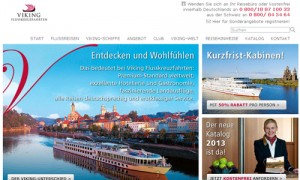
    Auch das Alter sollte kein Hindernis für Fernreisen sein, auch ohne die erforderlichen Fremdsprachenkenntnisse nicht. Wer mit 70 noch Jeans trägt ist heute normal und wer in diesem Alter reist und die Welt entdeckt genauso. Doch wenn es um fremde Länder mit anderen Zeit- und Klimazone und fremden Sprachen geht, wächst trotz guter Gesundheit und Fitness die Unsicherheit bei Generationen über 60 Jahren. Wie orientiere ich mich am fremden Ort, finde ich mich auch ohne Sprachkenntnisse zurecht? Mit 70 nach China – warum nicht? Es gibt Reiseformen, die machen dieses Abenteuer möglich, wie z.B. eine Flusskreuzfahrt in China. Mit der luxuriösen „Viking Emerald“ zum Beispiel (www.http://Viking-flusskreuzfahrten.de/media/china-09-2012-aspx).

    http://www.viking-flusskreuzfahrten.de/

    VIKING / viking-flusskreuzfahrten

    Das Fazit der diversen Untersuchungen lautet daher: Es ist auch ohne Sprachkenntnisse möglich in fremde Länder zu reisen.

    (Autor: I. Koltermann  /  Bilderbearbeitung: I. Koltermann / Karikatur: A. Korkis /  Quelle:  Goethe-Institut Madrid , www.auslandsjob.de , Viking-flusskreuzfahrten.de )

  • Overseas: Education in Libya Part 1

    Education in Libya, a critical Analysis of Higher Education Sector. Wir beginnen in unregelmäßiger Folge mit der Vorstellung von Bildungssystemen in der Welt. Dieser Gastbeitrag ist von Dr. M. Taghavi, London (Vice-Principal, Academic & Executive Programmes, IBEC, Tripoli, Libya, www.ibec.edu.ly).
    M. Hermsdorf / pixelio.de
    (Foto: M. Hermsdorf, pixelio.de)
    For over forty years, the previous regime of Muammar Gaddafi had claimed that it had placed education and health on the top of the nation’s list of priorities. Since the early 1970s, education in Libya has been free to everyone from elementary school up to university level, at home or abroad. Schools were deliberately spread out throughout the country, with the policy of education reaching out even to nomadic hard-to-reach areas. Undoubtedly, as supported by the World Bank statistics, the literacy rate of 40% back in 1970, has now reached a staggering rate of 89% and this is significantly higher than that of the average MENA of around 77%.

    Furthermore, according to the UN statistics, over the period 1970-2000 nearly 7-10 percent per annum of Libya’s GDP was allocated to and spent on different education and training programmes. Moreover, on the basis of the estimated measure of welfare, usually referred to as the “human development index”–HDI consisting of a weighted average of life expectancy, adult literacy, and GDP per capita-Libya scores 0.8 out of 1.0, slightly higher than that of the average MENA of 0.75, placing it among the top 50 nations in the world. However, since the opening up of Libya back in the early 2002 and the subsequent fall of the old regime in 2011, the validity and quality of such educational claims have been seriously doubted. Since then, due to availability of more channels of information and general trans-parency, a large number of schools and colleges have been identified as having delivered extremely poor quality of teaching and management of their  resources.
    Uli Carthäuser pixelio.de
    (Foto: Uli Carthäuser pixelio.de)

    Following a thorough investigation, it has recently been reported that between the two poles of primary school and post graduate education, the system is “corroded by corruption, lack of  teachers’ motivation and poor management”. This issue was also highlighted in Porter (2006)  report on Libyan economy, stating that education policy “has failed to provide a job ready workforce, since the education system is disconnected from market demand”. It is further argued that education policy decisions have “negatively affected education inimportant areas for business such as IT and foreign languages.“

    Teaching innovation and pedagogical development has been almost absent, even at the higher education level. This problem has been severely worsened since the early-1980s when the then regime ordered schools to stop teaching foreign languages, hence denying the nation of any progressive methods of teaching adopted by the Westerners.. Moreover, such policy had a detrimental effect on development and publication of academic research across board. In short, closeness to the regime rather than merits has been the main criterion for job security and promotion in public sector; and that had led to general demise of incentives and innovative efforts by teaching staff across the country.
    http://www.ibec.edu.ly/

    In the light of these controversies, this paper attempts to analytically highlight, estimate and evaluate some of the imbalances between output and outcome of the state-run higher education sector in Libya under the previous regime. In so doing, the research has used a survey questionnaire of up to 200 lecturers/teachers/instructors and has applied a hill-climbing logit model to measure the causes and the extent of the poor quality in Libyan education system.

    The article is structured in four parts.  Part 2  addresses some of the main issues relating to Libyan education system,  highlighting, in particular, aspects of budget allocation and productivity. In part 3 we present the survey data, econometric model and analysis of findings. Finally, part 4 offers the final discussion and policy implications of the study. Pinto (2012)5Porter (2006: 72).Suwaed (2011: 23)7. We are very much indebted to Ibrahim Saadfor letting us have access to part of his survey findings. Finally, part 4 offers the final discussions and policy implications of the study.


    Die Mentoring4u Redaktion dankt dem
    Centrum für Nah- und Mittelost-Studien مركز الدراسات الشرق أوسطية مرکز پژوهشهای خاور میانه Philipps-Universität Marburg für die Unterstützung.


    (Autor: Dr. M. Taghavi (Vice-Principal, Academic & Executive Programmes, IBEC, Tripoli, Libya, www.ibec.edu.ly /  Bilder: M. Hermsdorf, Uli Carthäuser  / Quelle: Gastvortrag an der Universität Marburg Mai 2013 , pixelio.de)

    Die Mentoring4u Redaktion behält sich vor, Leserbriefe / E-Mails – mit vollständigem Namen, Anschrift und E-Mail-Adresse – auch gekürzt zu veröffentlichen. Gastbeiträge spiegeln nicht unbedingt die Meinung der Redaktion wieder.

  • Vielfalt à la carte! Oder: Was heißt eigentlich Diversity? – Gastbeitrag „Junge Redaktion“

    Beobachtet man die gesellschaftliche Debatte dieser Tage, so ist in den letzten Jahren viel davon die Rede, dass die Gesellschaft Verschiedenheit als Chance begreifen solle. In besonders hippen Ausschreibungen oder Publikationen heißt das dann „Diversity Management“.

    Doch welche Vielfalt ist gemeint?

    Wessen Andersartigkeit wird  hier positiv wahrgenommen und gefördert? Auffällig ist, dass Vielfalt als Chance fast ausschließlich im Kontext der Islam- und Zuwanderungsdebatte thematisiert wird. Gemeint ist also kulturelle Vielfalt. Es gibt Programme, die mehr Migranten in den öffentlichen Dienst holen wollen, Versuche Migranten zum THW oder in die Feuerwehr zu locken. Dies erscheint wohl wie ein Versuch, sie in deutschem Brauchtum zu unterweisen.

    Es gibt bei den Begabtenförderungswerken Sonderprogramme, um mehr Migranten in die Wissenschaft zu bringen. Der „Neue Medienmacher“ stellen ein Programm zur Förderung des Quereinstiegs von Migranten in den Journalismus bereit. Kurz und gut: Migranten sind, nachdem wir sie Jahrzehnte eher vernachlässigt haben, plötzlich eine hippe Zielgruppe. Sie haben, so scheint es, plötzlich einen Wert für diese Gesellschaft. Um keine Missverständnisse aufkommen zu lassen: Diese Programme sind begrüßenswert. Nachdenklich stimmt lediglich der in ihnen zum Ausdruck kommende Begriff von Vielfalt. Dieser ist zu eng und schließt die Perspektiven von weiteren „Randgruppen „aus.

    Gemeint sind hier im Besonderen die Schwerbehinderten. Und unter diesen wiederum vor allem jene 40%, die unter äußerlich sichtbaren Einschränkungen leiden, und weniger jene rund 60% ,die zum Beispiel nach einer Krebs-OP als schwerbehindert gelten, ohne deren Leid bagatellisieren zu wollen.

    Bemerkenswert ist, dass es trotz des überall postulierten Fachkräftemangels keine Debatte über die Frage gibt, wie man die Potenziale Behinderter besser nutzen kann. Zwar gibt es seit einigen Jahren eine Debatte um Schulen, die Behinderte und nichtbehinderte Schüler gemeinsam unterrichten. Diese Diskussion wird allerdings lustlos und widerwillig geführt. Es gibt auch keine offensive getragene Förderung für begabte und gleichzeitig behinderte Studierende (Inklusion). Auf die Tatsache, dass eingeschränkte Menschen mindestens zwei der vier üblichen Auswahlkriterien, kurze Studiendauer, exzellente Noten, internationale Mobilität und gesellschaftliches Engagement behinderungsbedingt nicht erfüllen können, wird nicht eingegangen.

    Auch auf dem freien Arbeitsmarkt sieht es schlecht aus. Behinderte sind überdurchschnittlich oft langzeitarbeitslos, was inzwischen zunehmend auch für hochqualifizierte gilt.

    Warum aber ist das Interesse Behinderte in die neue vielfältige Gesellschaft aufzunehmen, im Gegensatz zu Migranten so wenig ausgeprägt?

    Vermutlich liegt es daran, dass dem Gros der Gesellschaft Behinderte schlicht egal sind. Man ist an ihrer Perspektive auf die Gesellschaft ihren Potenzialen und ihrer Arbeitskraft nicht interessiert. Viele Arbeitgeber scheinen sogar zu bestreiten, dass Behinderte überhaupt über nutzbare Potenziale verfügen. Behinderte gelten als nicht leistungsfähig. Selbst wenn sie gut qualifiziert sind, ist die schizophrene Argumentation, der Betroffene sei zwar gut ausgebildet, könne aber wegen seiner Behinderung die Anforderung am Arbeitsplatz nicht erfüllen, nicht selten. Dies gilt trotz eines ganzen Füllhorns von Fördermöglichkeiten, auf die willige Arbeitgeber zugreifen können.

    Von Nöten ist ein Wandel auf der Arbeitgeberseite. Hier könnten Mentoringprogramme einen wichtigen Beitrag leisten, In sie sollten dann auch Behindertem, die den Berufseinstig geschafft haben, gezielt eingebunden werden. Es muss viel stärker anerkannt werden, dass auch Menschen mit Behinderungen grundsätzlich im Rahmen ihrer Möglichkeiten leistungsfähig sind.

    Auch eine drastische Anhebung der Ausgleichszahlung für die Nichterfüllung der Behindertenquote kann ein Mittel sein, um die Wirtschaft aufzuwecken und zu einem breiten Begriff von Vielfalt zu gelangen. Der kann diese Gesellschaft endlich umfassend bunt und tolerant machen.

    Weiter Informationen finden Sie auch hier und hier.

    (Autor: Henning Schmidt, Doktorand UNI Marburg)

    Die mentoring4u Redaktion behält sich vor, Leserbriefe / E-Mails – mit vollständigem Namen, Anschrift und E-Mail-Adresse – auch gekürzt zu veröffentlichen. Gastbeiträge spiegeln nicht unbedingt die Meinung der Redaktion wieder.